
Only a few items left
Dr. Chen grapefruit drops combine the active components of Echinacea purpurea, also known as purple coneflower, and grapefruit seed extract into a liquid formula. The solution form makes everyday intake particularly easy and convenient. This botanical extract is available in an amount of 30 ml, offering a practical way to consume both plant extracts.
Az étrend-kiegészítő nem helyettesíti a kiegyensúlyozott, vegyes étrendet és az egészséges életmódot.
Similar products









More from this brand










Description

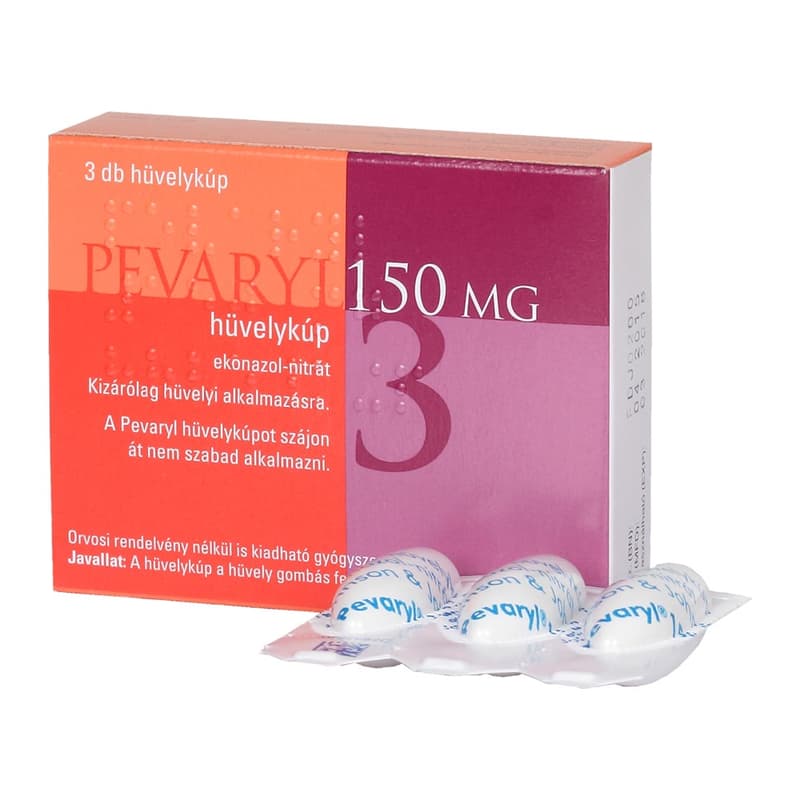
Pevaril 150 mg vaginal suppository econazole nitrate Read all of this leaflet carefully because it contains important information for you. This medicine is available without prescription. However, you still need to use Pevaril suppositories carefully to get the best results from them.
- Keep this leaflet. You may need to read it again.
- Ask your pharmacist if you need more information or advice.
- You must contact a doctor if your symptoms do not improve within 3 days or get worse.
- If any of the side effects gets serious, or if you notice any side effects not listed in this leaflet, please tell your doctor or pharmacist.
In this leaflet:
1. What Pevaril vaginal suppositories are and what they are used for
2. Before you use Pevaril vaginal suppositories
3. How to use Pevaril vaginal suppositories
4. Possible side effects
5. How to store Pevaril vaginal suppositories
6. Further information
1. WHAT PEVARYL VAGINAL SUPPOSITORIES ARE AND WHAT THEY ARE USED FOR
The suppositories are used to treat vaginal yeast infections (thrush). If you have any of the symptoms of a yeast infection (itching, burning, discharge) and your doctor has previously told you that these are caused by a yeast infection, using Pevaril vaginal suppositories can relieve these symptoms.
Vaginal yeast infection:
A vaginal yeast infection is a common type of vaginal infection. It is caused by a fungus called Candida. Candida is normally found on the skin, in the mouth, digestive system and vagina, even in healthy women. Sometimes the fungus grows too much, which can cause thrush.
Vaginal yeast infections can occur at almost any age, but they are most common in women aged 18-45. Women who are pregnant, have diabetes, are taking antibiotics or the contraceptive pill, or have a weakened immune system are more likely to get them.
Symptoms of a vaginal yeast infection:
The symptoms of a yeast infection can include:
· Vaginal itching (from mild to severe).
· A thick, white, cottage cheese-like discharge.
· Vaginal soreness, irritation and burning, especially during sex.
· A rash or redness around the vagina.
If you have a vaginal discharge that is different, for example, if it is yellow-green or smells fishy, this may mean that you do not have a yeast infection. In this case, see your doctor before using Pevaril vaginal suppositories.
2. BEFORE YOU USE PEVARYL VAGINAL SUPPOSITORIES
If you have never had these symptoms before, see your doctor before using Pevaril vaginal suppositories. Pevaril vaginal suppositories are for vaginal yeast infections, and if you have a different type of vaginal infection your doctor will need to decide on the correct treatment for you.
If you get vaginal infections often (more than twice in 6 months) or if your vaginal infection does not get better quickly (within 3 days) with the correct treatment, see your doctor straight away so that the cause can be investigated and the correct treatment given.
Do not use Pevaril vaginal suppositories:
- if you are allergic (hypersensitive) to the active substance or any of the other ingredients of the product,
Other medicines and Pevaril vaginal suppositories
Tell your doctor or pharmacist if you are taking or have recently taken any other medicines, including medicines obtained without a prescription.
Pregnancy and breast-feeding
The product should only be used during pregnancy if your doctor has specifically prescribed it, knowing that you are pregnant. If you are pregnant or think you may be pregnant, tell your doctor before using Pevaril vaginal suppositories.
Use with caution if you are breast-feeding.
Ask your doctor or pharmacist for advice before taking any medicine.
Effects on ability to drive and use machines
None known.
3. HOW TO USE PEVARYL VAGINAL SUPPOSITORIES
The usual dose is: 1 suppository inserted high into the vagina at the back, at night-time, for 3 consecutive nights. It is advisable to remain lying down for 10-15 minutes afterwards. During this time the suppository will melt and spread over the inside of the vagina.
· It is not advisable to start treatment during a period.
· Do not stop treatment if your symptoms disappear before you have used all three suppositories. It is important to use all 3 suppositories to make sure that the treatment is successful.
· Try to use the suppository at the same time each night, just before going to bed.
· Do not use tampons during treatment with vaginal suppositories.
· If your partner's genitals are itchy or red, it may be advisable for them to use Pevaryl 1% cream containing econazole at the same time to prevent re-infection.
· It is advisable to keep the external vaginal area dry, as a dry environment is less favourable for the growth of the fungus, so change out of wet swimwear as soon as possible after bathing or swimming. Wear cotton underwear.
· Wipe yourself from front to back (away from the vagina) after going to the toilet.
· Do not use vaginal douches unless your doctor has told you to. Douching can upset the natural balance of bacteria in the vagina.
· It is advisable to avoid scratching, as this can increase irritation and spread the infection.
· Tell your doctor if you are taking any other medicines. Some medicines can make the vagina more likely to get infections.
· Avoid sexual intercourse for 3 days. It is also not advisable to use a diaphragm, cap or condom during treatment, as these may be weakened or damaged and may interfere with the action of the suppository.
· Good hygiene is important to help prevent re-infection.
Pevaril vaginal suppositories are not recommended for use in children aged 2-16 years because of a lack of data on safety and efficacy.
There is insufficient data on the treatment of the elderly (>65 years).
If you have any further questions on the use of this product, ask your doctor or pharmacist.
4. POSSIBLE SIDE EFFECTS
Like all medicines, Pevaril vaginal suppositories can cause side effects, although not everybody gets them. Local irritation may occur - a temporary increase in burning - but this usually disappears quickly. It does not stain underwear.
If any of the side effects gets serious, or if you notice any side effects not listed in this leaflet, please tell your doctor or pharmacist.
5. HOW TO STORE PEVARYL VAGINAL SUPPOSITORIES
Do not store above 30°C.
Keep out of the reach and sight of children.
Do not use Pevaril vaginal suppositories after the expiry date which is stated on the carton after EXP. The expiry date refers to the last day of that month.
Medicines should not be disposed of via wastewater or household waste. Ask your pharmacist how to dispose of medicines no longer required. These measures will help to protect the environment.
6. FURTHER INFORMATION
What Pevaril vaginal suppositories contain
- The active substance is 150 mg econazole nitrate per vaginal suppository
- The other ingredient is hard fat.
What Pevaril vaginal suppositories look like and contents of the pack
Description: White or almost white, torpedo-shaped vaginal suppositories with a slight fatty odour.
Pack size: 3 vaginal suppositories in PVC/PE blister packs and a box.
Marketing Authorisation Holder
Johnson & Johnson Kft.
2045 Törökbálint, Tó Park
Manufacturer
Janssen-Pharmaceutica N.V, Beerse, Belgium
OGYI-T-7337/01
Date of approval of the package leaflet: 09.04.2010