
Játszmák az étkezőasztal körül
Játszmák az étkezőasztal körül - Így vess véget az étkezések körüli csintalankodásnak!
A babák örök felfedezők, akik kíváncsisága és tanulási vágya nem kerüli el az étkezéseket sem. Így aztán könnyen repül a kanál, fröccsen a csempén a paradicsomszósz, vagy éppen landol a kenyérdarabka a pohár vízben. Előző cikkemben elmagyaráztam, hogy ez a viselkedés mikor jelent egy normális fejlődési szakaszt, és mikor válhat fárasztó játszmává.
Ebben az írásomban azokra a helyzetekre szeretnék egy kicsit pontosabb segítséget nyújtani, amikor már tisztán látszik, hogy a csíntalanság mögött nem egy tanulási folyamat, hanem unalom, figyelemfelkeltés, vagy rossz kommunikáció húzódik.
Első a pókerarc!
Az első lépés és a legfontosabb stratégia - akár felfedezésről, akár játékról van szó - , hogy hagyjuk figyelmen kívül, ha babánk az evés helyett inkább mondjuk a gravitáció működésével van elfoglalva! Ne rohanjunk a székéhez percenként, és ne tiltakozzunk hatalmas gesztikulációk közepette! Fő a nyugodt, higgadt, semleges viselkedés. Ha így teszünk, azzal nagyobb az esély, hogy gyermekünk - miután kitanulmányozta magát - pár alkalom alatt “leszokik” a részünkről nem annyira kívánatos viselkedésről.
Ne kössünk kompromisszumot!
Ha azonban úgy látjuk, hogy a pici nem “veszi a lapot”, és továbbra is remekül elszórakoztatja magát, ne menjünk bele egy ördögi “húzd meg, ereszd meg” játszmába, azaz ne kössünk kompromisszumot az evés érdekében! Ha a csíntalankodás továbbra is fennáll, vessünk véget az étkezésnek - ne tűrjünk azt remélve, hogy a játék közepette még hátha elfogy egy-két falat! Aggodalomra nincs ok, ha a pici megéhezik, a következő étkezésnél bőven lesz lehetősége pótolni az elmaradottakat - mondjuk éppen a dobálózás helyett.
Ha úgy érzékeljük, hogy rendszeresen fennáll a gond babánk magatartását illetően, érdemes a következő megoldásokon végigmennünk, hiszen a nyugtalan viselkedést gyakran valami - számunkra - apró dolog okozza.
- 1, Ellenőrizzük az etetőszéket, vagy az ülésmagasítót! Kényelmesen és megfelelően ül benne a csemeténk? Meg van támasztva a lába? Megfelelő a biztonságérzete, nem billeg a szék? Bagatell dolgok ezek, de gyakran csak ennyin múlik a nyugodt étkezés.
- 2, Tartsuk az étkezések ütemtervét! Ha az evések között nincsen nasi, meg csipegetés, azzal nagyobb az esély arra, hogy a pici valóban éhesen ül az asztalhoz. Ha így történik, garantáltan kevésbé fog eszébe jutni, hogy játsszon az étellel - evés helyett.
- 3, Inkább kisebb adagokat adjunk! Egy 1-2 éves gyermek számára még zavaró és túlterhelő lehet a túl sok étel a tányéron, ezért érdemes inkább kevesebb, kisebb porciót adni mindenből. Aggodalomra nincs ok, ha a baba még éhes, az értésünkre fogja adni, hogy repetázna!
- 4, Mutassunk jó példát, és együnk együtt gyermekkel! A legjobb, ha mi magunk mutatjuk be az asztalnál elvárt viselkedést. Közben beszélgethetünk, vagy csak magyarázhatunk a babának - ezzel is fenntartva a figyelmét és az érdeklődését.
A leggyakoribb jelenetek - és megoldásuk
A következőkben sorra veszek néhány tipikus szituációt, és azt, hogy hogyan lehet a legegyszerűbben hasznos - de legalábbis kevésbé zavaró - mederbe terelni a zavaró cselekvéseket:
1, Az étel dobálása
Talán az egyik leggyakoribb probléma, hogy az étel, vagy az evőeszköz rendszeresen a földön landol. Míg ez első nekifutásra nem jelent problémás viselkedést, addig ha rendszeres figyelem vagy reakció kíséri, a baba számára könnyen játékká válhat.
A fenti tippeken felül még próbálkozhatunk azzal, hogy olyan evőeszközt adunk babának, amely nem csörömpöl a földre érve, vagy olyan étellel kínáljuk, amihez nem is kell evőeszköz.
Ha maga az ebéd az, ami rendszeresen vesz fel nem kívánt röppályát, kikészíthetünk néhány extra tálat a baba köré, bíztatva, hogy inkább oda tegye a nem kívánt ételdarabot.
Érdemes a dobálózás megkezdésekor azt is megkérdezni a picitől, hogy eleget evett-e, hiszen gyakran így fejezik ki a kicsik, hogy végeztek, és köszönik, de nem kérnek többet.
2, Ha repül a tányér és a pohár
A fenti példánál egy fokkal bosszantóbb, ha maga a tányér, vagy a pohár kel légi útra, főleg, ha mindezt a tartalmával együtt teszi. Ha a baba kisebb, érdemes lehet tapadókorongos eszközöket beszereznünk, vagy pár napig olyan ételt tálalnunk, ami kényelmesen kínálható az etetőszék tálcáján is. Ha a gyermek már picit nagyobb, szintén próbálkozhatunk a “szép szóval”. Szóljunk rá nyugodt, de határozott módon ha dobálózik, és vonjuk el beszélgetésekkel, vagy apró, evéshez köthető feladatokkal a figyelmét! (Pl.: “Fel tudod kanalazni a szószt a tányérodról?”)
Fontos, hogy ha valamelyik eszköz a földön landol, reagáljunk nyugodtan (még akkor is, ha a vacsora is benne volt)! Adjunk még 1-2 esélyt a gyereknek, ha azonban továbbra is dobálózni szeretne, fejezzük be az étkezést - és a játszmát!
3, Maszatolás
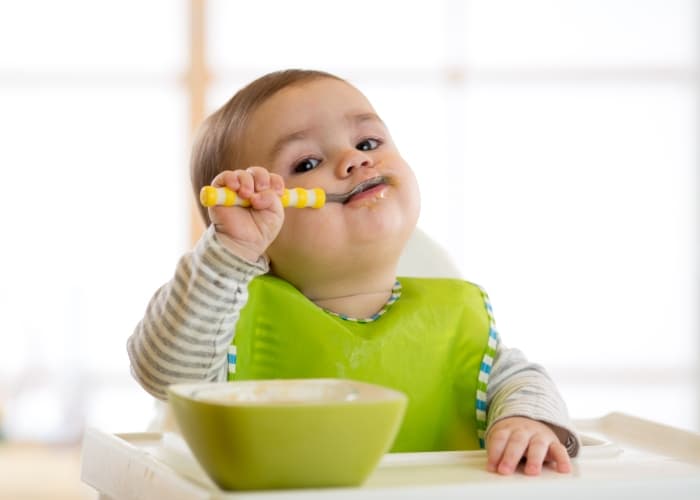
Az étel szétkenése, maszatolása tipikus mozzanata a tanulási folyamatnak és elősegíti, hogy később egy ügyes és jól evő gyermeket kapjunk, ezért fontos, hogy az első alkalmakkor ne kezdjünk el pánikban törölgetni mindent, hanem hagyjuk, hogy gyermekünk felfedezze a textúrákat, színeket, anyagokat.
A maszatolás a későbbiekben gyakran annak jele lehet, hogy csemeténk végzett az evéssel, ezért érdemes erre is figyelni!
4, Ficánkolás az etetőszékben
Gyakori jelenet, hogy a baba felteszi a lábát az etetőszék tálcájára, vagy megpróbálja magát ellökni az asztaltól. Ahogy feljebb már írtam, érdemes ilyenkor megvizsgálnunk, hogy megfelelő-e az ülőalkalmatosság a számára?
Persze az is előfordulhat, hogy a már szintén gyakran említett okokról van szó: a baba unatkozik, a figyelmünket szeretné, vagy végzett az evéssel.
A megoldás természetesen most is ugyanaz: ha nem veszélyezteti magát, ne tulajdonítsunk túl nagy figyelmet a viselkedésének, ha viszont zavarja az evést, fejezzük be az étkezést!