
Öklendezés vagy fuldoklás?
Öklendezés vagy fuldoklás?
Minden szülő retteg attól, hogy a kisbabája valamit meg- vagy feleszik, ami aztán a torkán akad és további problémákat okoz. Ez teljesen természetes, de az irracionális félelmek táplálása helyett sokkal jobban járunk, ha szembenézünk rettegésünk okával és megtesszük, amit lehet.
Mi a különbség az öklendezés és a fuldoklás között?
Az öklendezés egy velünk született ösztön, melynek során a száj hátsó harmadából a falat a köhögéshez hasonló eseménysor eredményeképpen a száj első harmadába kerül. Az öklendezés oka, hogy amikor az étel veszélyesen közel kerül a gégefedőhöz, az agy köhögéshez hasonló cselekvésre ösztönzi a babát. Ezáltal a falatka újra biztonságos helyre kerül a szájüregen belül. Az öklendezés tehát ránézésre ugyan ijesztő, valójában azonban nagyon is hasznos ösztöncselekvés.
Fontos, hogy ha babádat öklendezni látod, akkor is fogd vissza aggodalmad jeleit, ha megijedtél. Ennek hiányában ugyanis a baba az étkezéshez könnyedén hozzákapcsolhatja a félelmet , ami egyben az ételek elutasításával is együttjárhat. Tanuld meg megkülönböztetni az öklendezést a fulladástól! Utána már csak elég arra gondolnod, hogy babád szervezete tökéletesen működik.
A fuldoklás ezzel szemben akkor következik be, ha nyelés közben a gégefedő nem záródik teljesen, így a falat a nyelőcső helyett részben vagy teljesen a légcső legfelső szakaszán landol. Ilyenkor a köhögés, illetve a fuldoklás teljesen ösztönös cselekvés és a beragadt falat eltávolítására szolgál.
A fuldoklás jelei és kezelésük
Ha a baba vagy a kisgyermek félrenyel és a fuldoklás jeleit mutatja, azonnali közbelépésre van szükség. Fontos tudnunk, hogy ha a kicsi
-
egyáltalán nem kap levegőt;
-
képtelen sírásra, beszédre vagy bármilyen hang kibocsátására;
-
zihál vagy szapora a légzése;
-
arca eltorzul, esetleg kékesszürke vagy lila árnyalatot ölt;
-
eszméletét veszti
nincs idő a várakozásra, azonnal lépni kell!
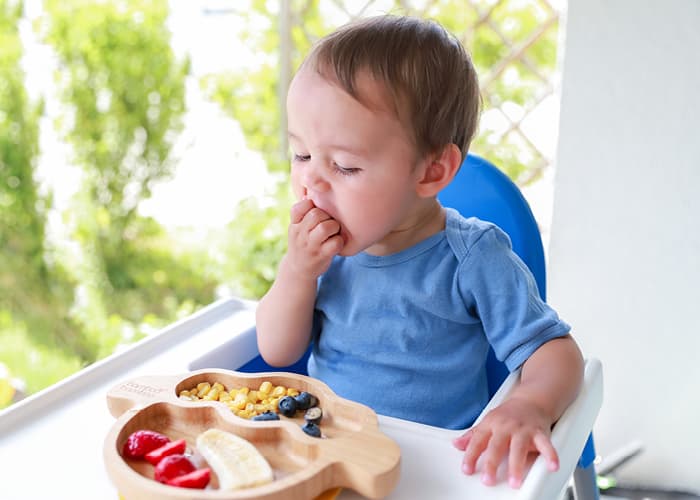
Ilyen vészhelyzet esetén két fontos dolgot kell tudnunk. Az egyik, hogy a pánik a legrosszabb tanácsadó, így bármennyire ijedtek vagyunk is, maradjunk józanok! A másik, hogy szigorúan tilos a kicsi szájába nyúlva megpróbálni a falat eltávolítását! Előfordulhat ugyanis, hogy ahelyett, hogy kiszednénk a légzést gátló darabot, még mélyebbre nyomjuk a nyelőcsőben azt.
Vészhelyzet esetén hívjuk a 112-t és kérjük a diszpécser iránymutatását. Ezzel párhuzamosan végezzünk Heimlich-fogást kisgyermekünkön! Egy évesnél fiatalabb baba esetében pedig fektessük alkarunkra a kicsit, majd a lapockák tövére mért enyhe ütésekkel próbáljuk segíteni a légzését!
Tippek fuldoklás elkerülésére
A kisgyermekkori fulladásos esetek kiküszöbölése érdekében célszerű mindig gyermekünkkel lenni, amikor étkezik. Ha a baba mohó, gondoskodjunk róla, hogy mindigy csak egy-két falat legyen a tányérjában! Így nemcsak a fuldoklást kerülhetjük el, hanem az evés normális ritmusát is megismertethetjük vele.
Célszerű emellett elvégezni egy gyermekélet-mentő tanfolyamot, melynek segítségével nemcsak az öklendezés és a fuldoklás jeleit ismerjük majd fel minden kétséget kizáróan, hanem a szükséges egészségügyi lépéseket is biztonságosan elsajátíthatjuk.
