
 Discount prices
 Save the food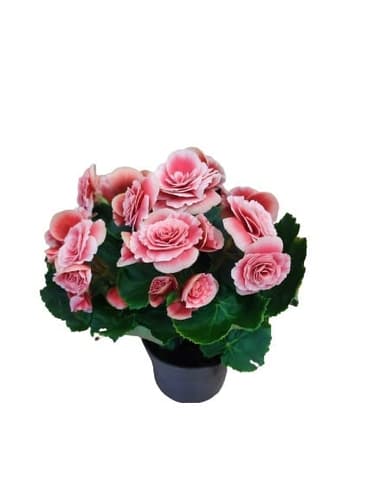
Begonia in 13 cm pot
1 pcDelivery within 90 minutes
AI Summary
Every day, we source locally for the freshest groceries you can trust.
- Description
- Composition
- Similar products
- More from this brand
- Recipes

The begonia is one of the most popular houseplants, enchanting homes with its colourful flowers and lush foliage. It is easy to care for, making it an ideal choice for both beginner and experienced gardeners. In this article, we share the most important information regarding the care, maintenance, and propagation of begonias, with a special focus on the Begonia elatior variety. Learn everything about how to get the most out of this wonderful plant!
Origin and description of Begonia
Begonia is a member of the Begoniaceae family, which includes over 1500 species. The elatior is a hybrid variety created by crossing various begonia species. Its origin is South America, where the tropical and subtropical climate provides favourable conditions for its growth. Its characteristic features are its fleshy stem and varied, lush inflorescence. It is also very popular as a houseplant, as its flowers bloom for a long time and its care is relatively simple.
Begonia care and requirements
When caring for begonias, several basic aspects must be taken into account. It is important to ensure proper light conditions, temperature, and watering. The plant prefers bright locations protected from direct sunlight. The soil should be well-draining, and care should be taken to ensure that the roots do not sit in water, as this can lead to root rot. It also needs nutrient supplementation, especially during the flowering period.
Light requirements of Begonia elatior
Begonia elatior has moderate light requirements, meaning it prefers bright locations protected from direct sunlight. Diffused light is ideal for it, ensuring proper growth and flowering. North or east-facing windows are the most suitable, where it is not exposed to overly strong sunlight. If placed in too dark a spot, the plant may wilt, and its flowering may be inhibited. Too much sunlight, however, can scorch the leaves, so it is important to find the right balance.
Product information
The information provided here for the products is for preliminary guidance only; final information will be provided on the label of the specific product after you receive it.