Every day, we source locally for the freshest groceries you can trust.
- Description
- Composition
- Similar products
- More from this brand
- Recipes
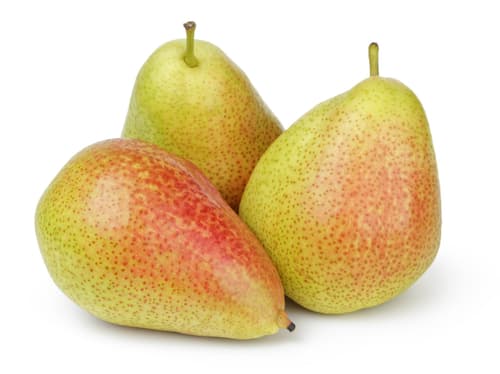
The Forelle pear was first cultivated randomly in 1670 in Germany. It is a small, symmetrical fruit, averaging 5-7 centimeters in length. It has a crisp, sweet and tart taste, flavored with cinnamon, and contains potassium, calcium, vitamin C, and fiber.

Interesting facts
The word 'forelle' means trout in German, referring to the pear's colorful skin and pink blush. Many Germans believed that the pear's pore-covered skin resembled the color of spawning salmon, and the pear was named as a play on its skin's texture. The Forelle pear is also a popular variety for holidays, as its rich hues add color to edible centerpieces, home decorations, and gift baskets.
Uses
The Forelle pear is best used raw, as its small size makes it unsuitable for cooked recipes. It is most often eaten fresh as a snack, as an accompaniment to winter salads, and as a garnish for savory soups. It can also be used in oatmeal, muesli, pancakes or waffles, layered in sandwiches, paninis, and quesadillas, chopped into salsa, or as an element for chocolate fondue. The Forelle pear also pairs well with semi-sweet and bittersweet chocolate, aged cheeses, Greek yogurt, chicken, pork belly, and ham.
Storage
Store in a dry, cool place between 12-15°C.
Product information
The information provided here about the products is for preliminary guidance only; final information will be available on the product label upon receipt of the product.